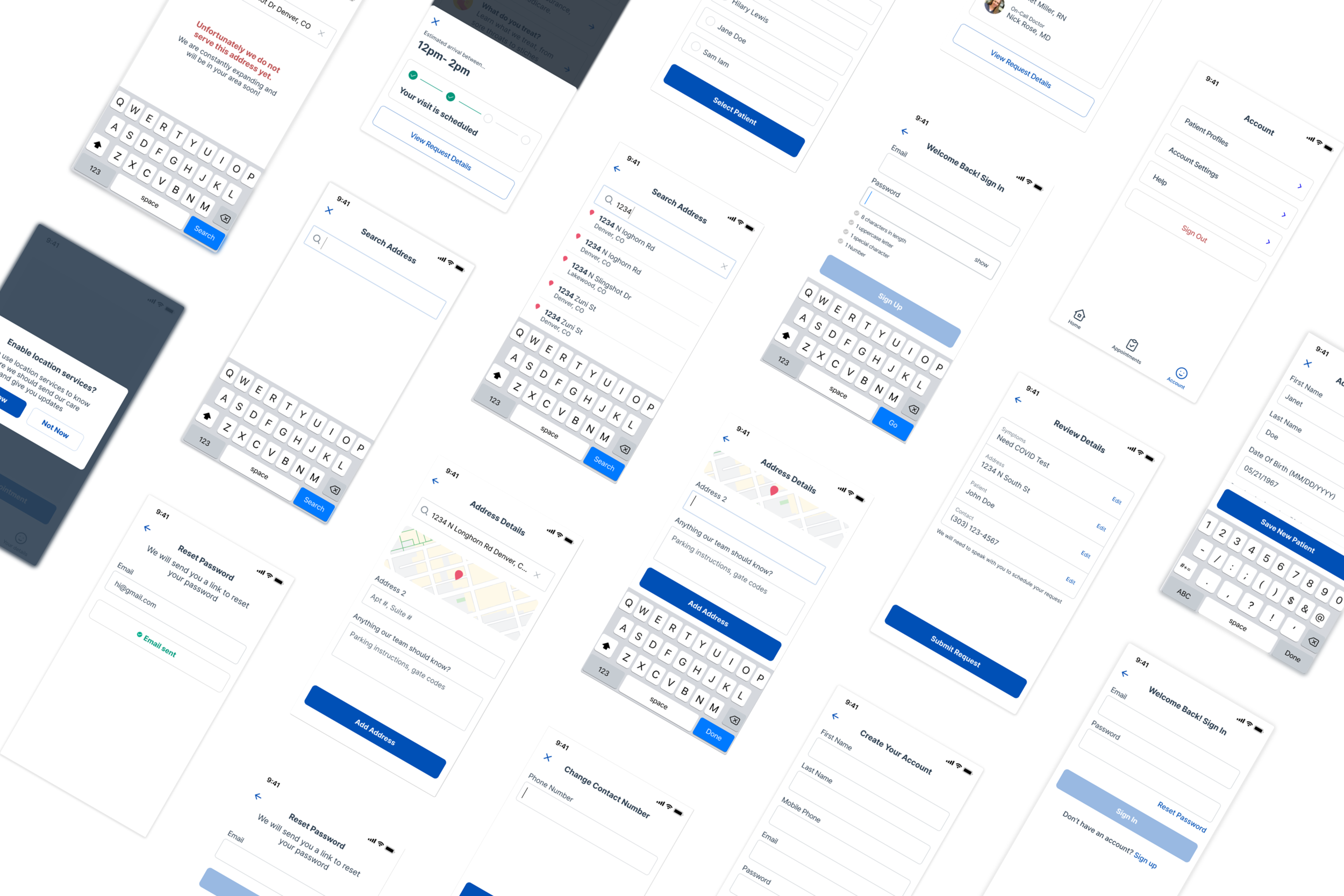
Building trust in at-home medical appointments.
DispatchHealth gives patients access to medical care from the comfort of their own home. However, there was a significant number of patients who were not completing their appointment after making an online request. It was our job to figure out why, and come up with a solution to fix it.
Key metric
Reduce the amount of no-show* appointments by 10%.
*The no-show category accounted for any drop-off after an online appointment request was submitted.
Results
34% increase in scheduled appointments 38% drop in canceled appointments
The team
• Senior product manager
• Engineering manager
• Clinical and logistics operations team leads
Taking a closer look at no-shows
We found the “no-show” metric masked distinct drop-off points across the experience.
By breaking it into clearer stages: incomplete requests, pre-arrival cancellations, and true no-shows, we could pinpoint where the friction occurred and design targeted interventions.
I mapped the post-request flow and paired it with patient interviews to clarify root causes and prioritize the highest-impact solutions.
Our research surfaced two key drop-off points contributing to ‘no show’
Immediately after an online request is submmitted
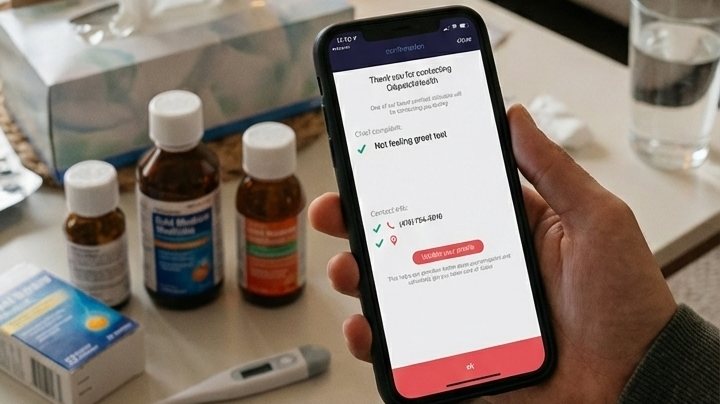
After submitting a request, patients didn’t realize additional steps were required. Many were unaware they’d receive a follow-up call to finalize scheduling, so they ignored or screened these calls.
Clinical team arrival
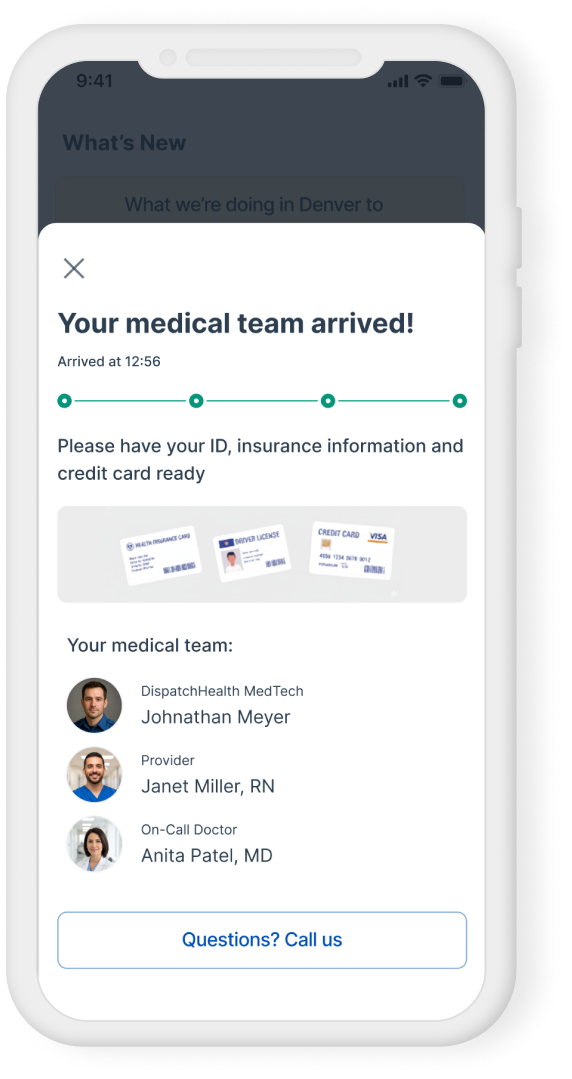
Patients weren’t notified when the clinical team arrived. Without an arrival alert and only an en route update, patients were confused, leading to missed appointments and a clear communication gap.
How might we communicate important appointment updates to our patients?
The design approach
There were two distinctly different problem areas identified, so we took an incremental approach and broke this out into two sequential buckets of work.
Using friendly language and operational transparency (and many low and hi fidelity design iterations!), I updated the post-request design to reflect the internal scheduling and dispatch process in a way that patients can understand.
Reduce incomplete appointment requests
If we update the confirmation page to explicitly state the steps needed to schedule an appointment, they will be more likely to complete their appointment.
Before
The original confirmation page failed to indicate that a phone call was required to schedule the appointment, leading to missed actions and frustration. Inconsistent use of content, iconography, and interaction patterns created confusion and eroded user trust — ultimately impacting both the patient experience and overall appointment conversion.
What changed
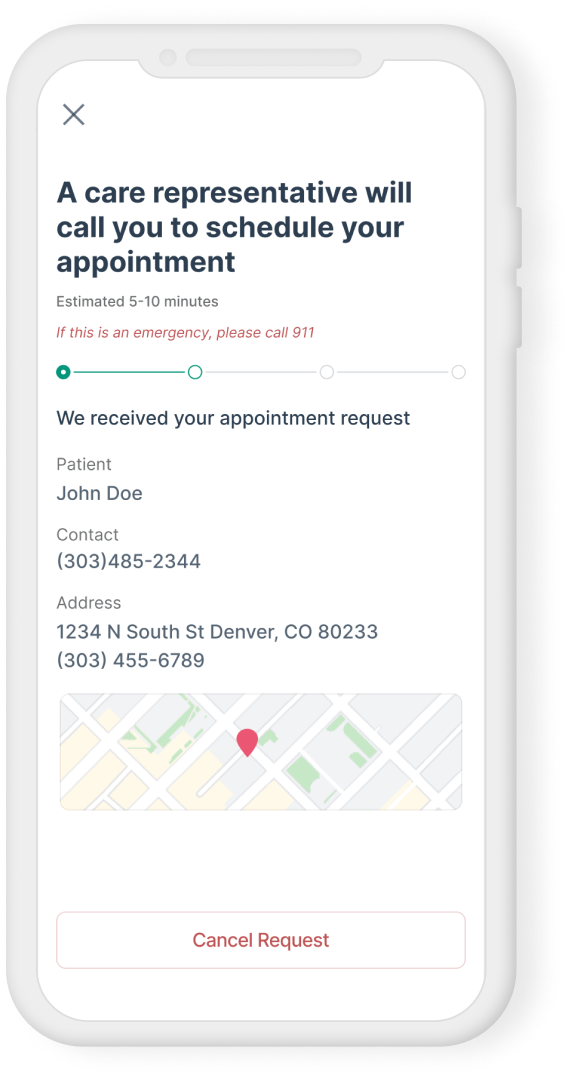
I updated the confirmation page to make it clear the request is not confirmed. I focused messaging on setting appropriate expectations about the required phone call to schedule the appointment. Additionally, we surfaced the self serve request cancellation to reduce inbound calls to cancel - a burden for the care team. (This action was available, but hidden, in the account.)
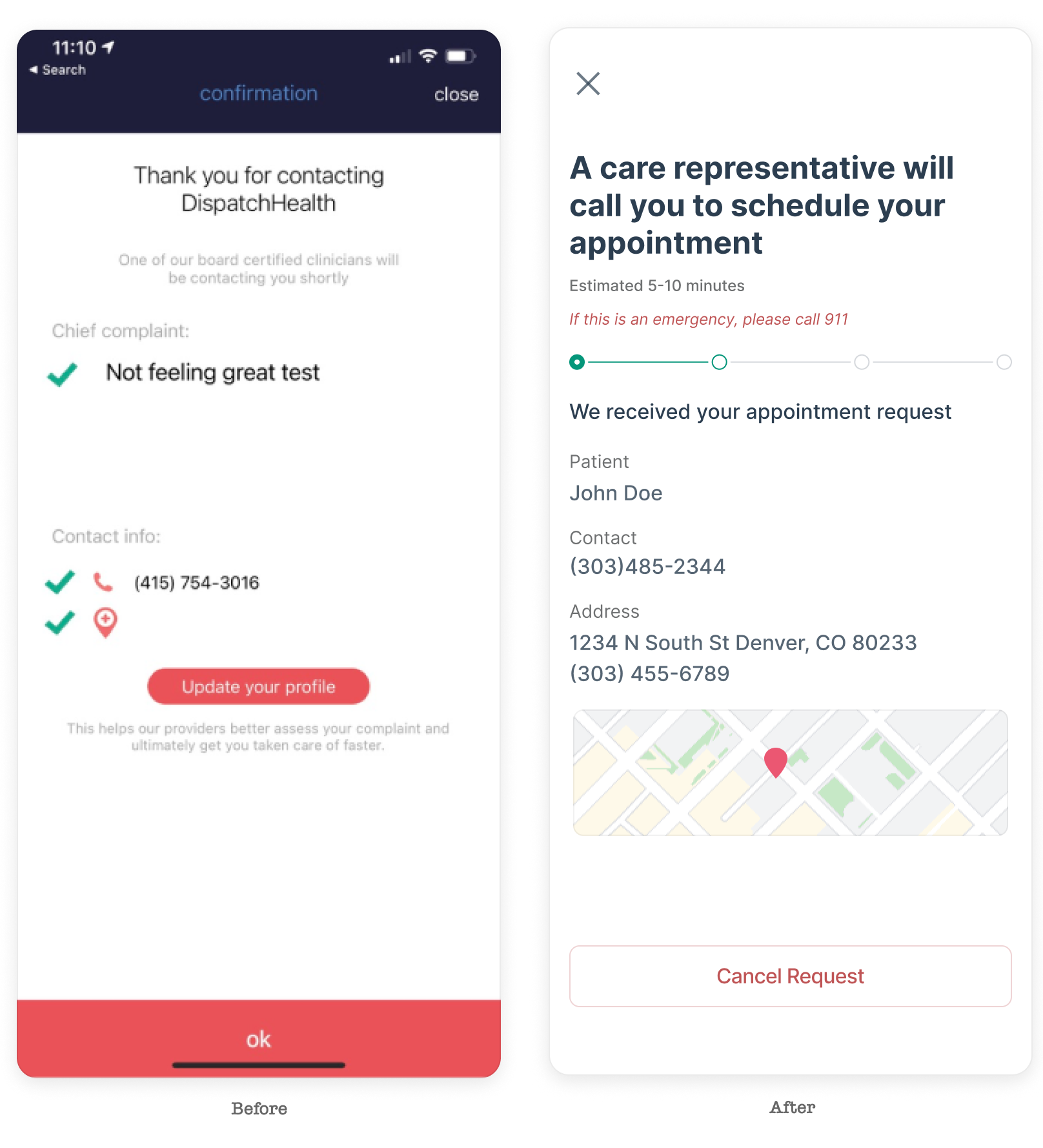
This was designed to scale. The modular structure allows the updated status work (below) and future iterations to reuse the same framework, with a flexible component that supports easy content updates.
Focus two
Reduce no shows after an in-home appointment is scheduled, and the clinical team has arrived
If we update the statuses after an appointment is scheduled, patients will be more likely to complete their appointment.
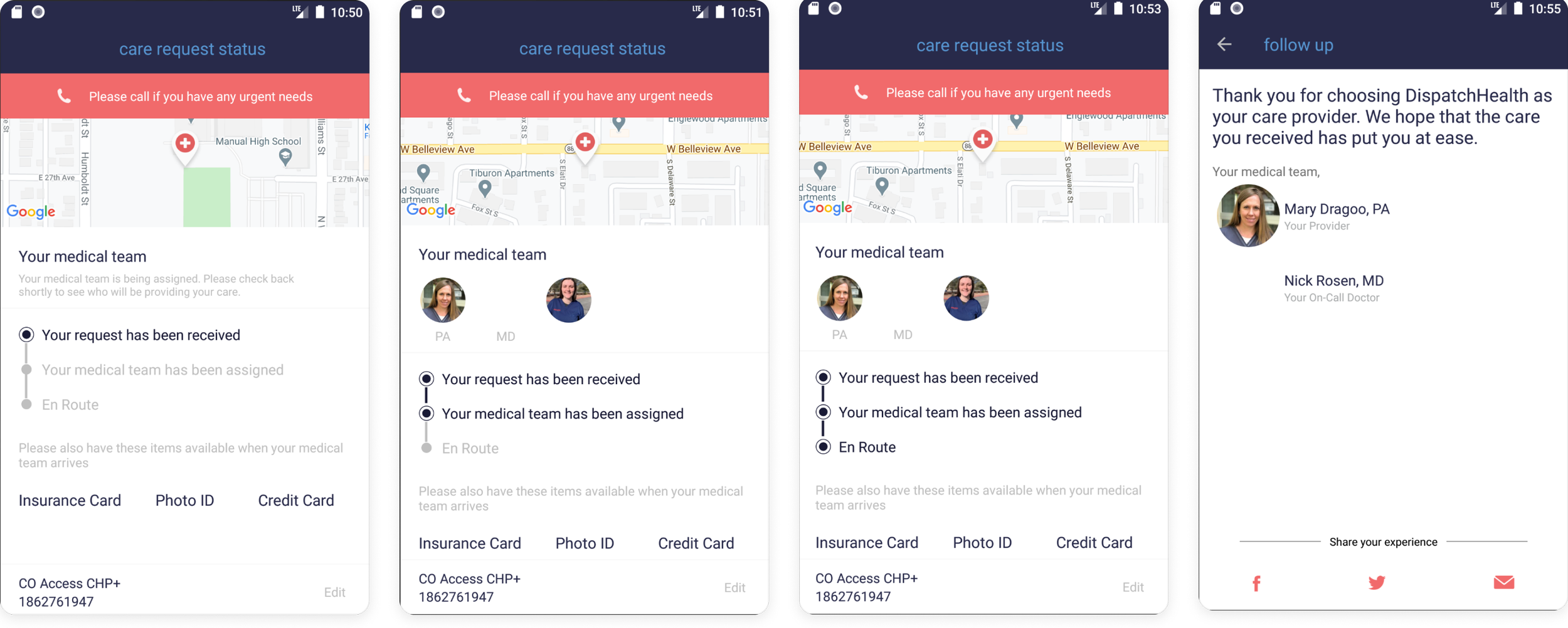
Before
Previously, the appointment statuses were built with limited dynamic updates, and no arrival indicator. As a result, patients often missed time-sensitive information needed to prepare for their appointments. Additionally, a static map was mistaken for real-time tracking, creating confusion around the clinical teams location.
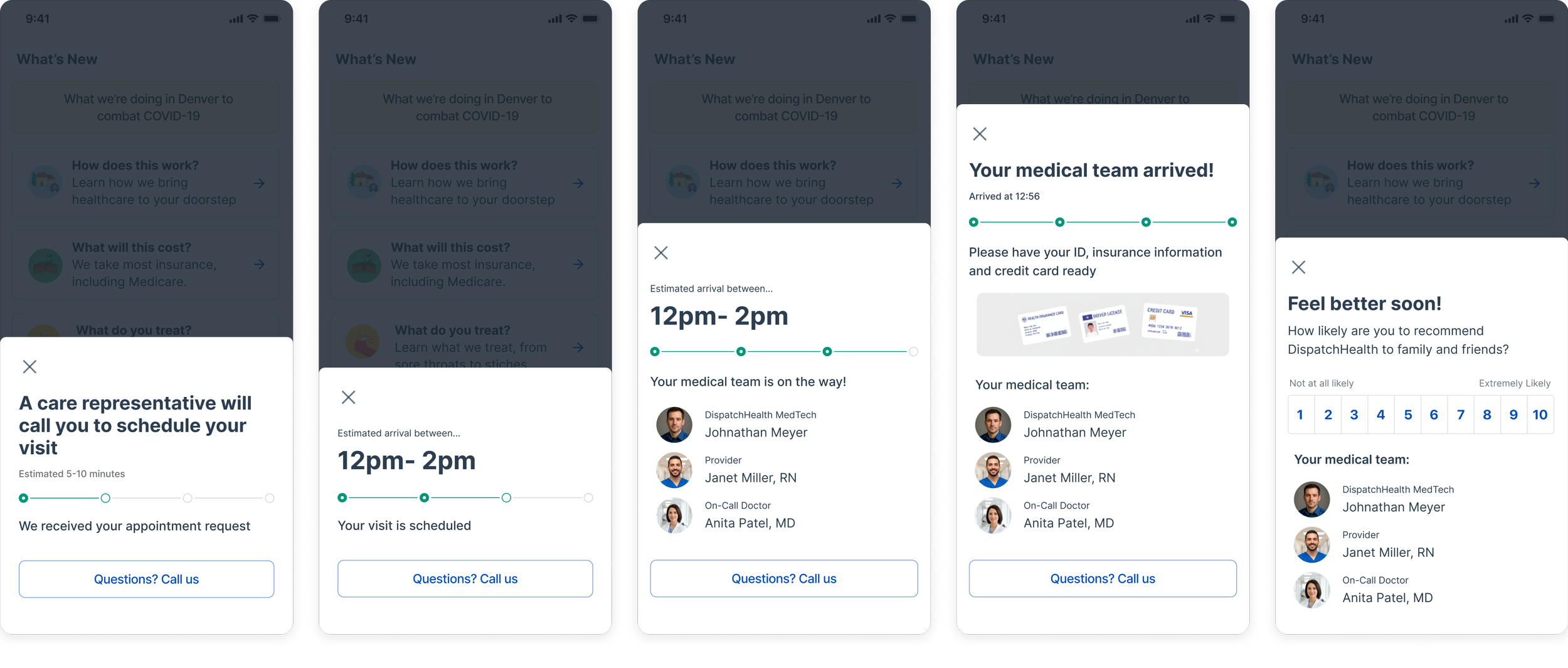
What changed
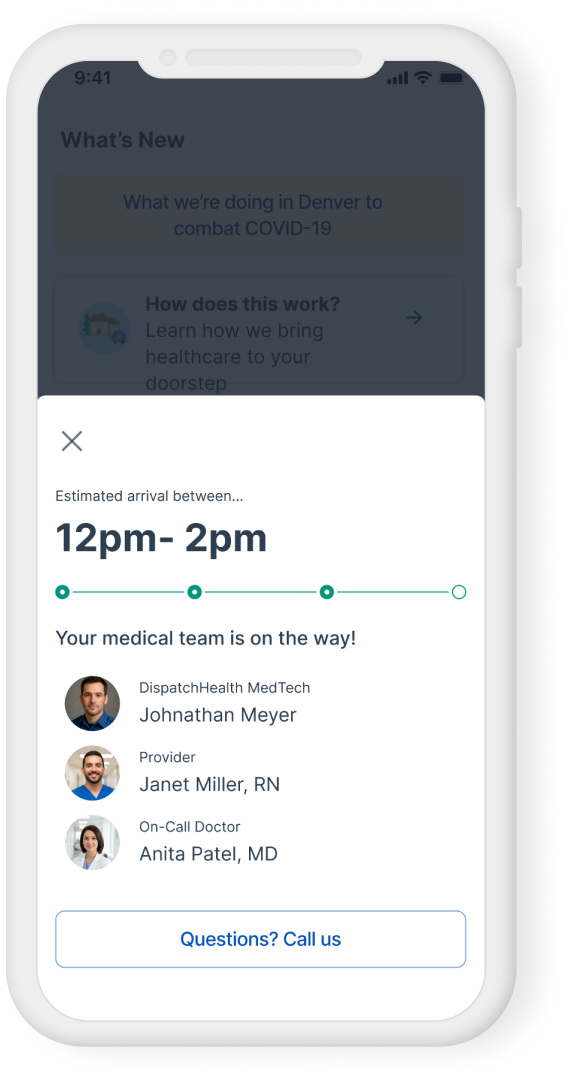
To improve visibility of time-sensitive appointment updates, we updated the dynamic status modality to better communicate the most critical and contextually relevant information. Other notable changes:
Updated the “medical team has been assigned” status to “visit is scheduled.”
While the underlying event remained unchanged, the new framing emphasizes appointment timing and confirmation—better aligning the update with patients’ mental model of how a visit progresses and what they’re waiting for next.Removed the static destination map to eliminate confusion around real-time tracking.
Although the event already existed, the patient experience was missing this critical confirmation, leaving a gap in the visit timeline that contributed to uncertainty and significant drop-off.
Updated the “visit completed” status to capture CSAT -a top business priority, replacing indirect links to socials intended to capture reviews.
Updated the request for visit documents to appear at arrival, surfaced directly within the arrival status and paired with clear visual cues, so patients understand what’s needed at the exact moment it’s relevant.
Impact
34%
Increase in scheduled appointments
38%
Drop in cancelled appointments
Drop in inbound support calls from web-initiated requests
27%
Post-appointment CSAT completed, with 16% improvement in CSAT score
92%
What’s Next?
This work sparked multiple new initiatives focused on global design improvements, greater logistic tracking capabilities, and new design system standards for scalability and consistency.