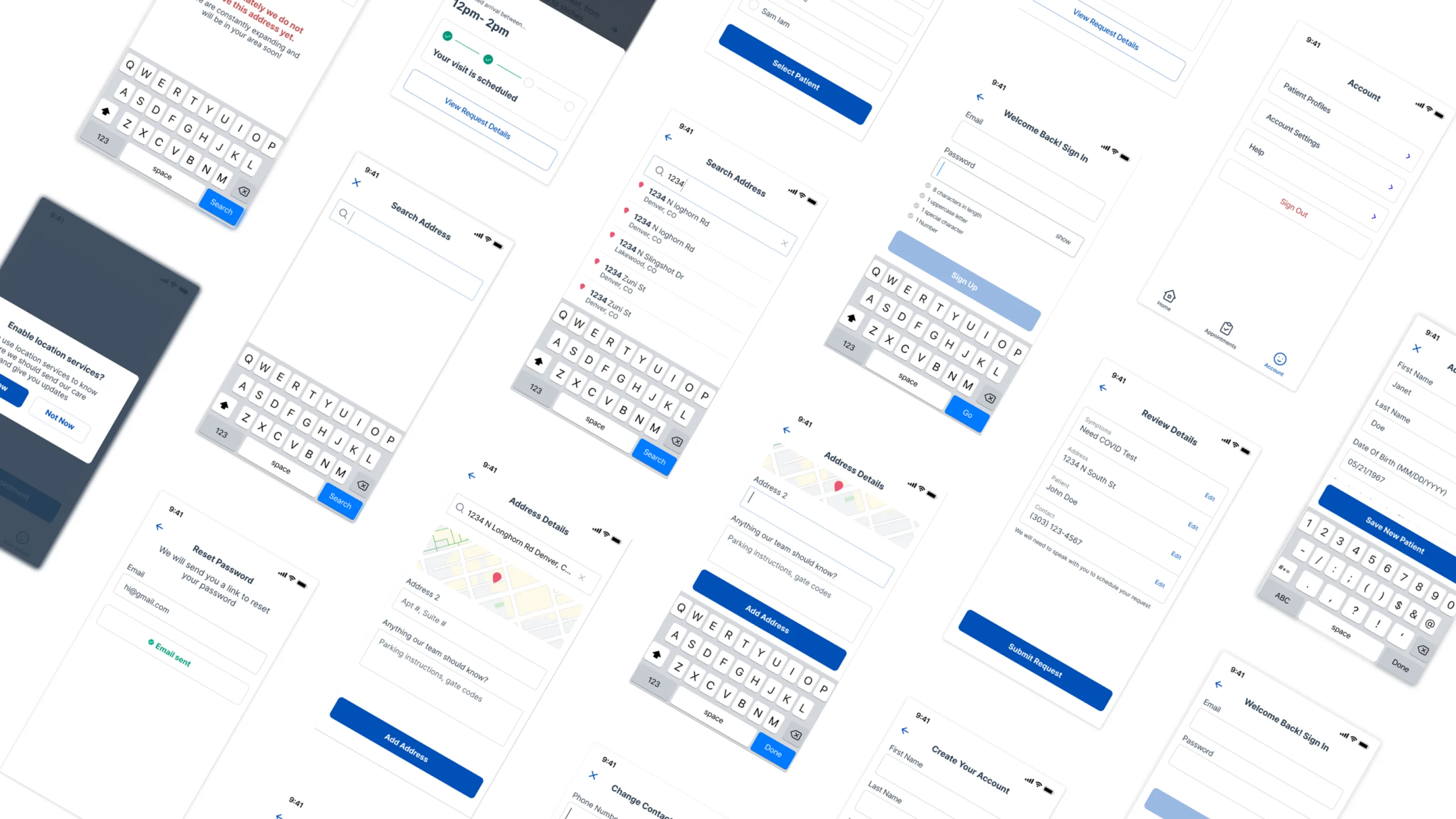
Helping patients book and complete at-home visits
DispatchHealth gives patients access to medical care in the comfort of their own home, by requesting a team of NPs and EMTs to come to their home. However, a significant number of patients were not completing their appointment after making a care request. Our job: figure out why, and fix it.
Taking a closer look at no-shows
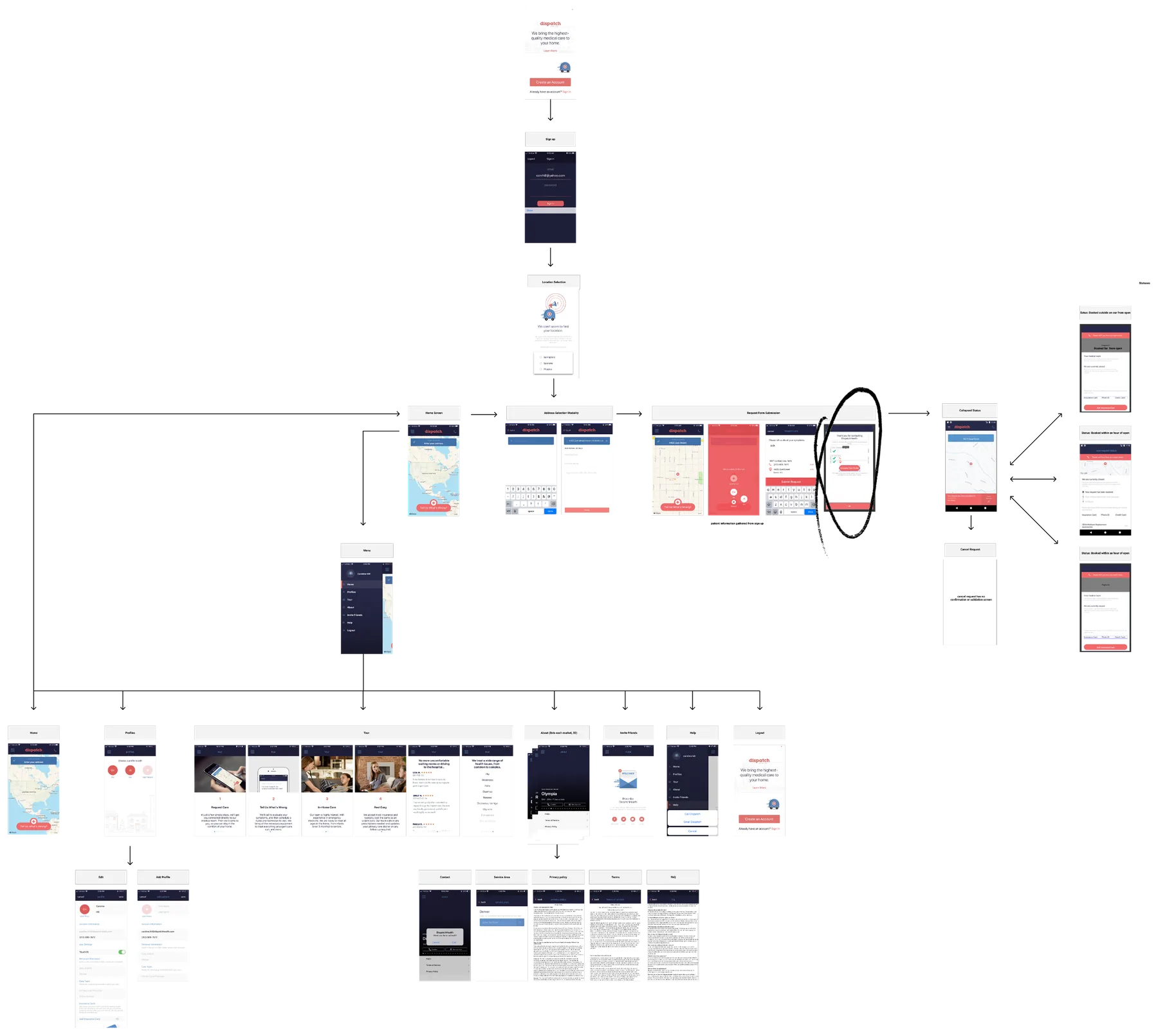
The “no-show” metric masked distinct drop-off points across the experience. By breaking it into clearer stages (incomplete requests, pre-arrival cancellations, and true no-shows), we could pinpoint where friction occurred. Although patients could submit requests on native iOS, Android, or web, they were required to use the native app to track visit status after requesting on the web. Since web drove the majority of requests and the team was already prioritizing a transition to a progressive web app, I mapped the web post-request journey and paired it with patient interviews to identify where users dropped off and why.
Two key drop-off points emerged

The design approach
Two distinctly different problem areas meant we took an incremental approach, broken into two sequential buckets of work, using friendly language and operational transparency to reflect the internal scheduling and dispatch process in a way patients could understand.
Reduce incomplete appointment requests
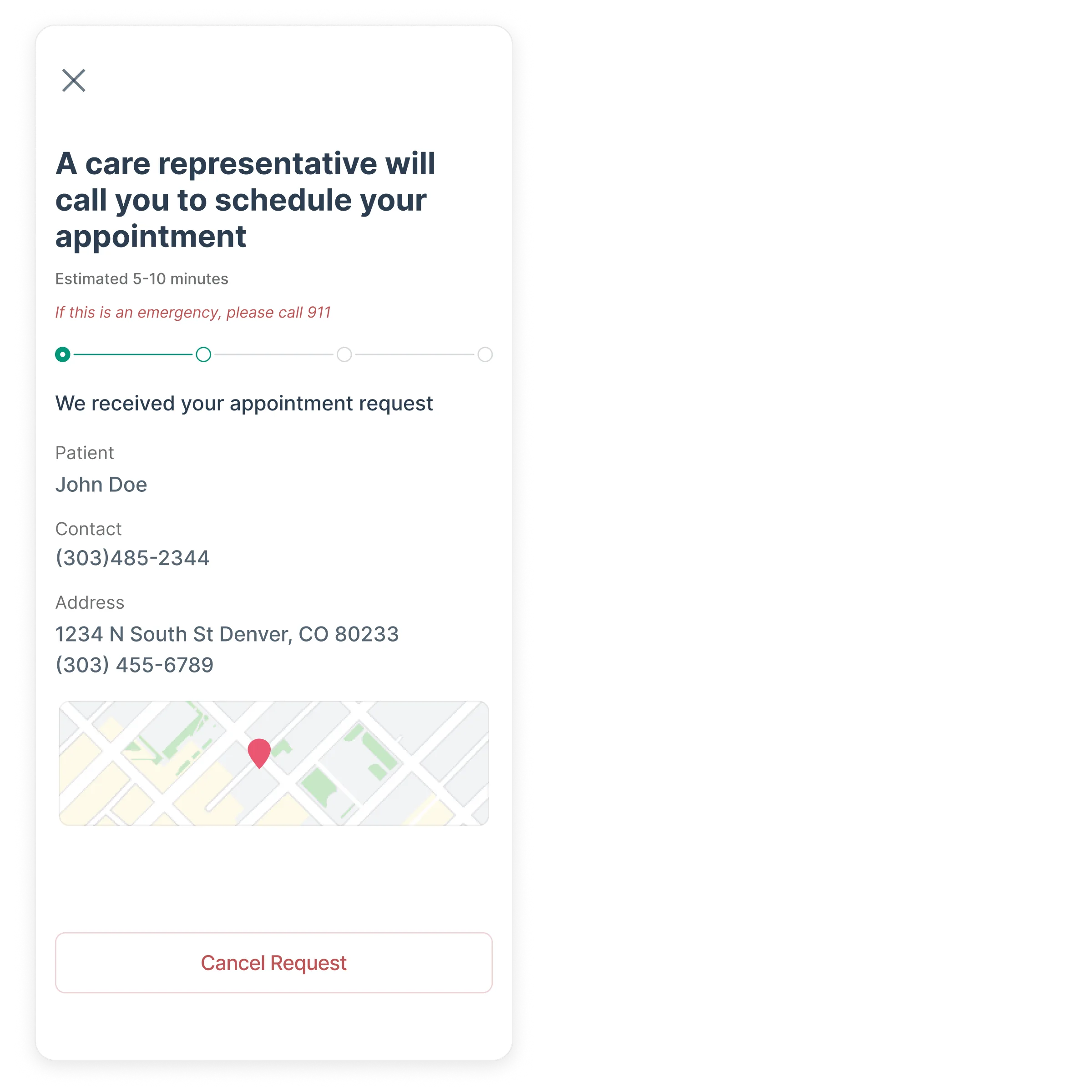
Hypothesis: If we update the confirmation page to explicitly state the steps needed to schedule an appointment, patients will be more likely to complete it.
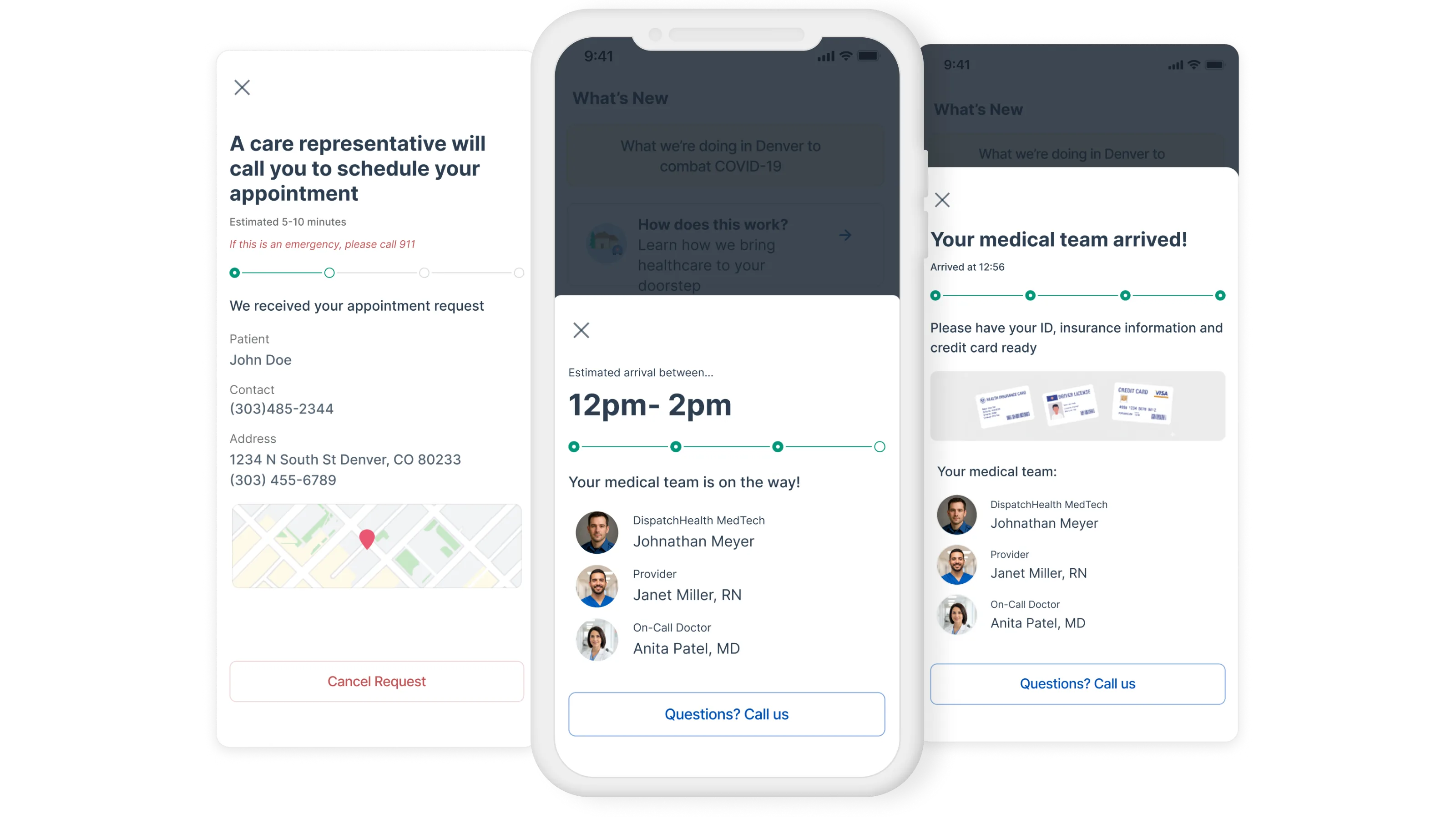
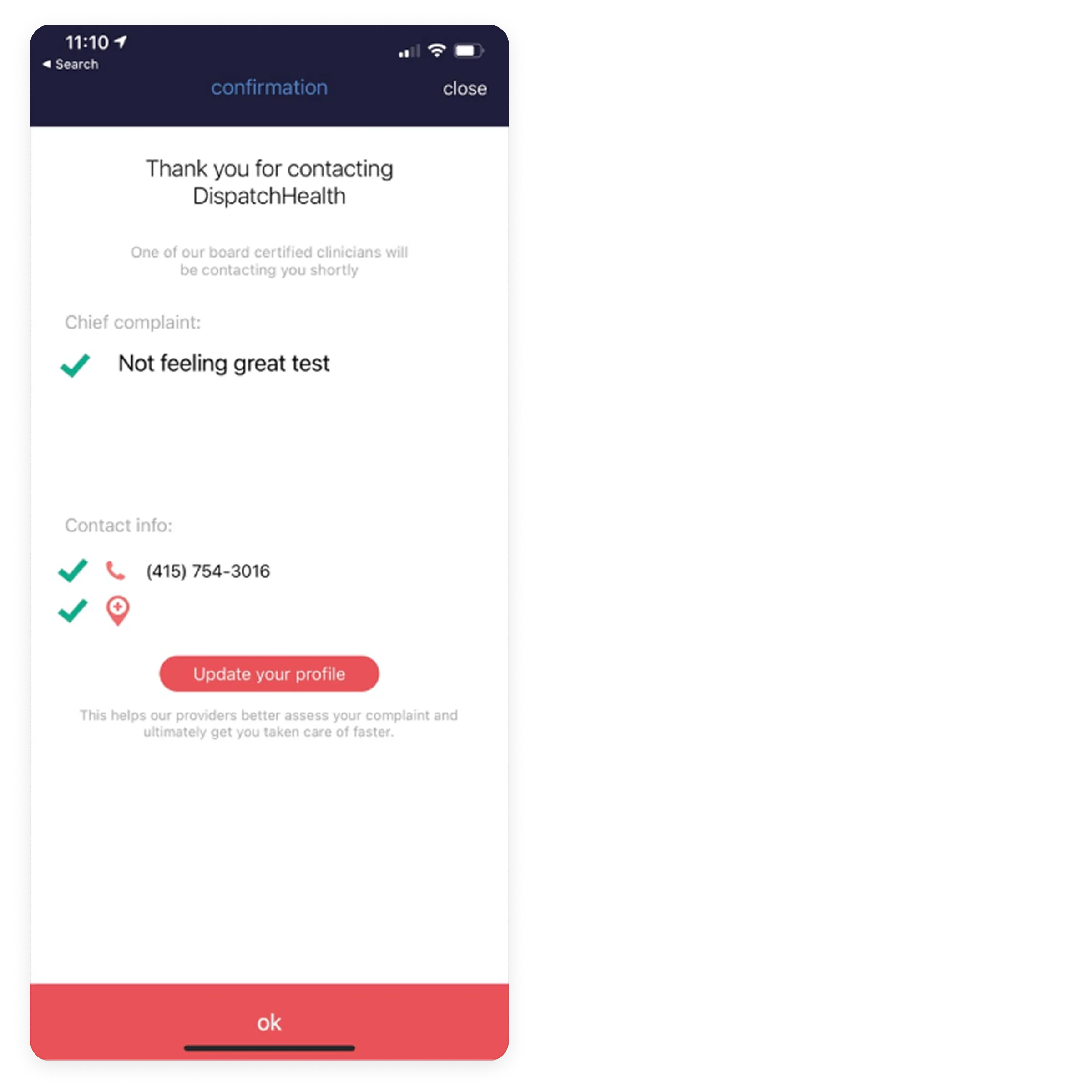
The confirmation experience failed to communicate that scheduling required a follow-up phone call, leading to missed calls, appointment no-shows, and avoidable support volume. I clarified the visit status, explained the scheduling process and expected timeline, and surfaced self-serve cancellation to reduce operational burden on the support team.
Reduce no-shows after the clinical team has arrived
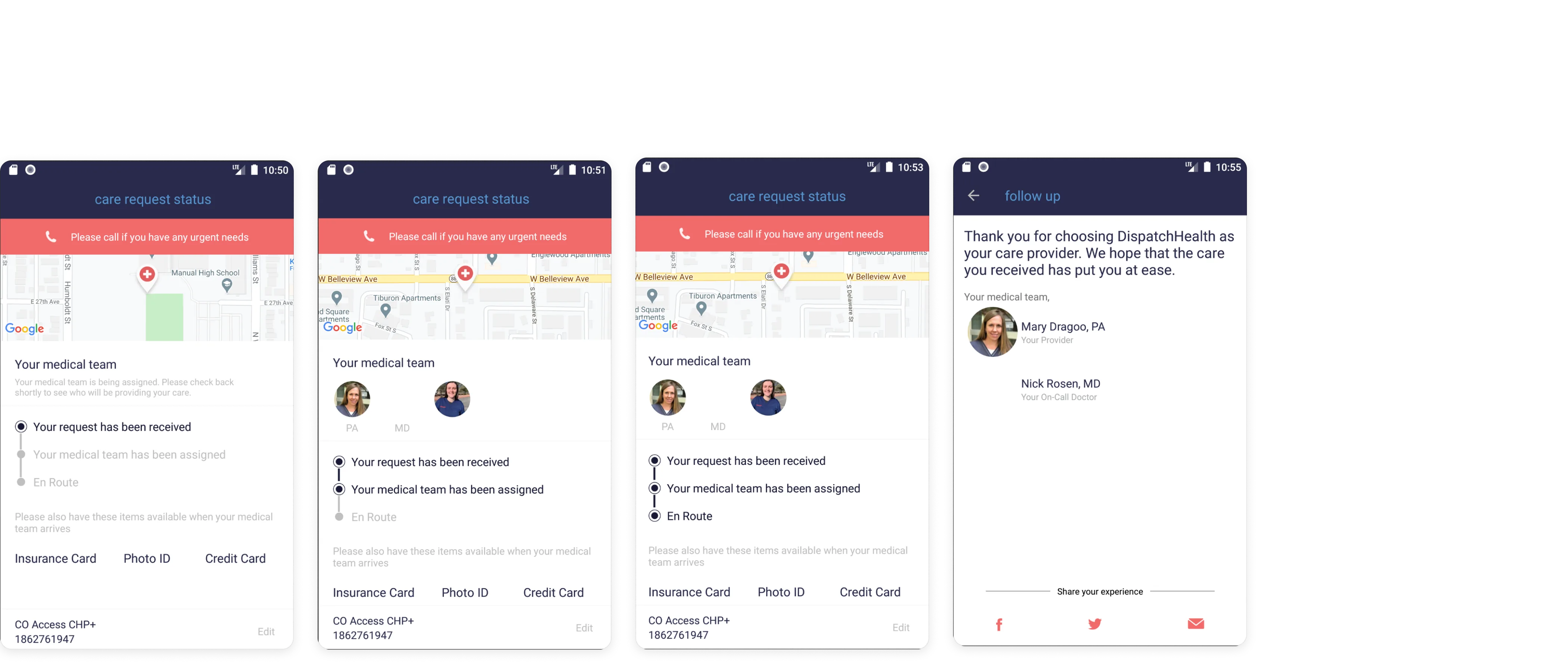
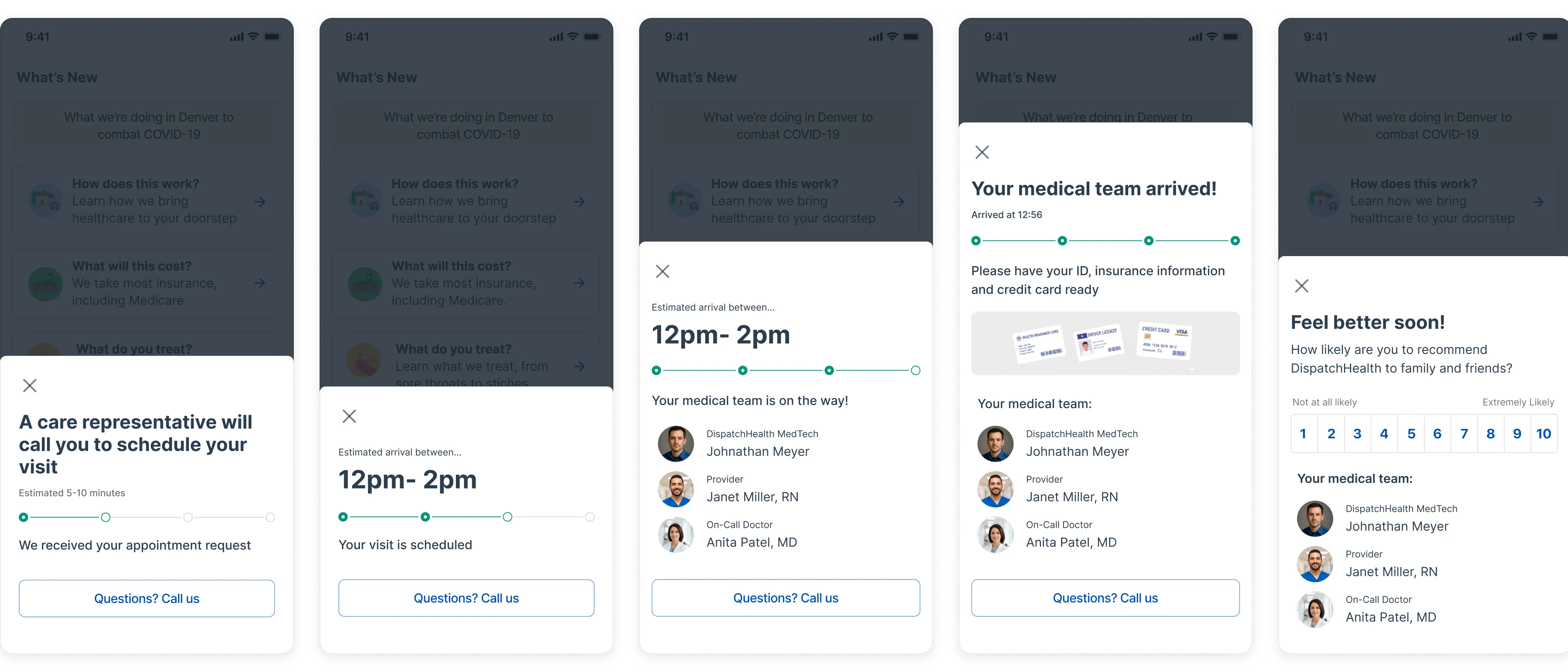
Hypothesis: If we update the statuses after an appointment is scheduled, patients will be more likely to complete their appointment.
Patients had limited visibility into visit progress, leading to confusion and unnecessary support outreach and cancellations. We introduced dynamic status updates, replaced the static map with meaningful progress indicators, surfaced required documents before clinician arrival to reduce appointment delays, and moved CSAT collection to visit completion, increasing the likelihood that patients would provide feedback on a metric the team had historically struggled to capture.
The results
From feature to foundation
This work sparked multiple new initiatives focused on global design improvements, greater logistic tracking capabilities, and new design system standards for scalability and consistency.