Helping renters resolve failed payments
Rhino is a B2B2C fintech company that helps renters meet lease requirements through flexible payment solutions. Renters who chose Rhino’s insurance alternative paid a monthly premium to protect their landlord, but 25% fell behind on one or more payments. That left $1.9M in outstanding revenue with few recovery options, since property managers controlled policy cancellations. Our goal was to recover that lost revenue.
Searching for signals
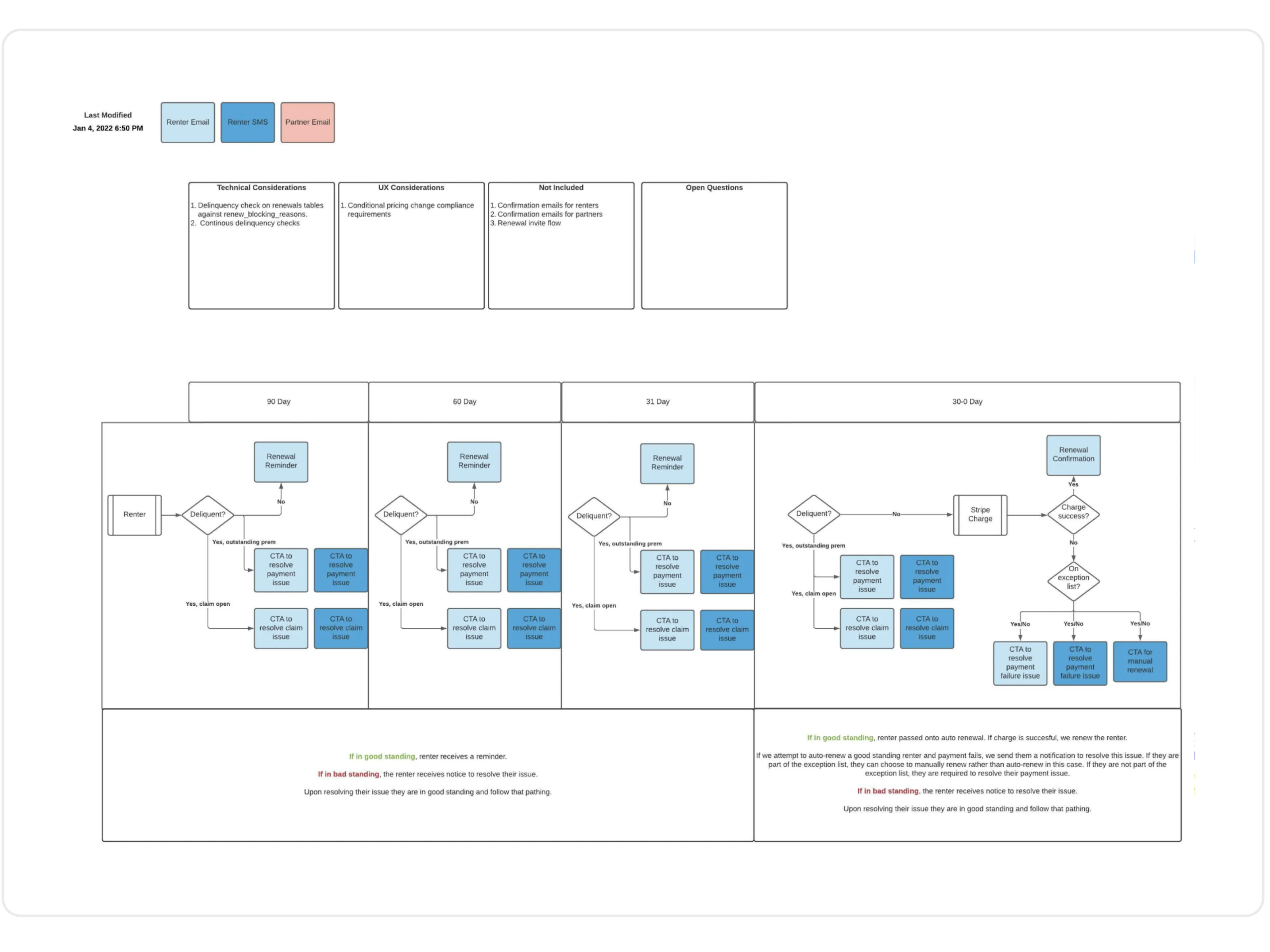
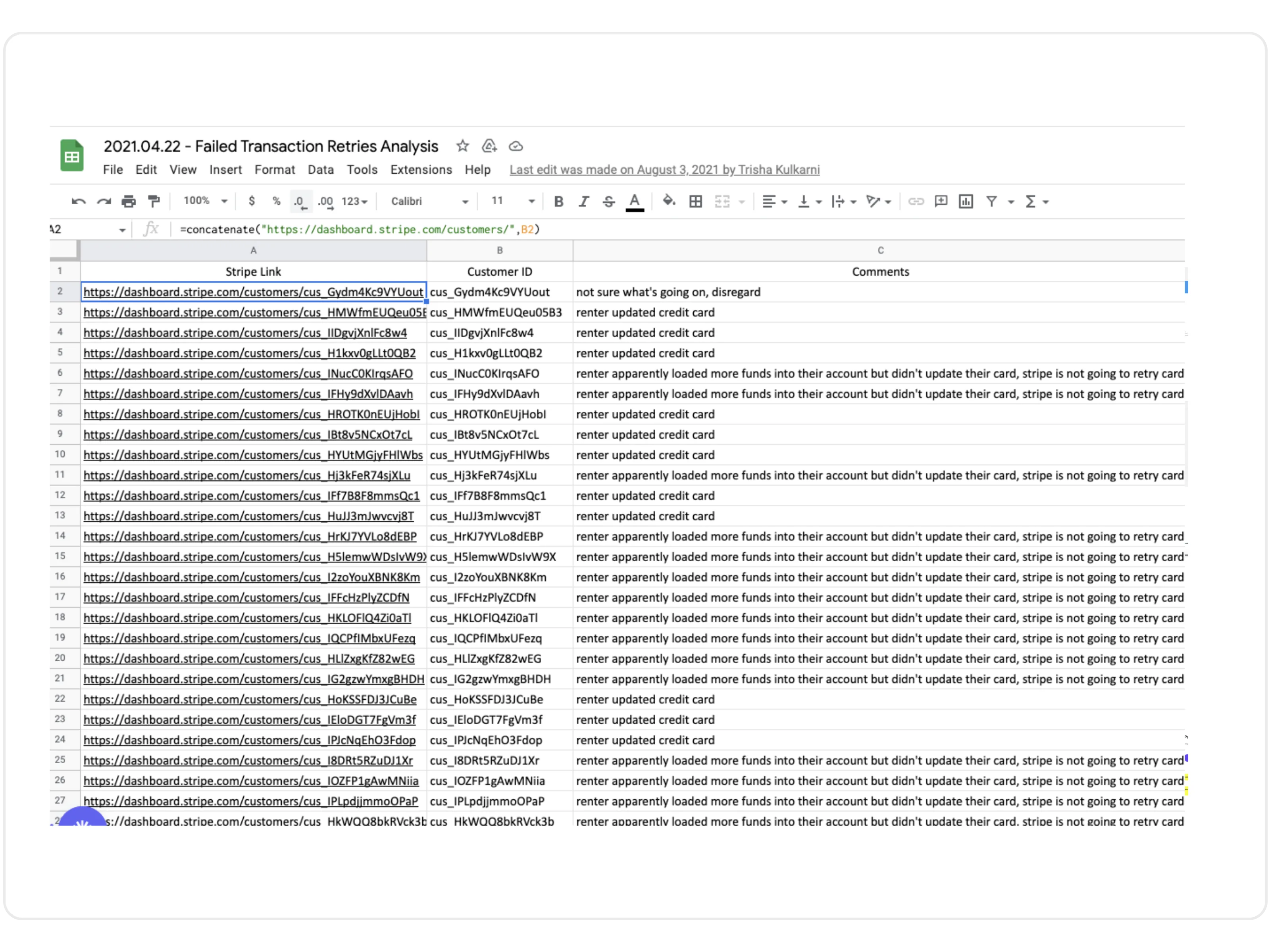
We undertook a multi-method research deep dive to understand renter payment failures within the broader payments system. Our work included mapping the existing payment recovery workflow, analyzing Stripe transaction data and support tickets for failure patterns, and conducting a targeted survey with delinquent renters to understand their bill-paying behaviors.
Insights
Renters needed a clear understanding of what they owed and a simple way to pay down their balance using the payment method they already had.
Two jobs to be done
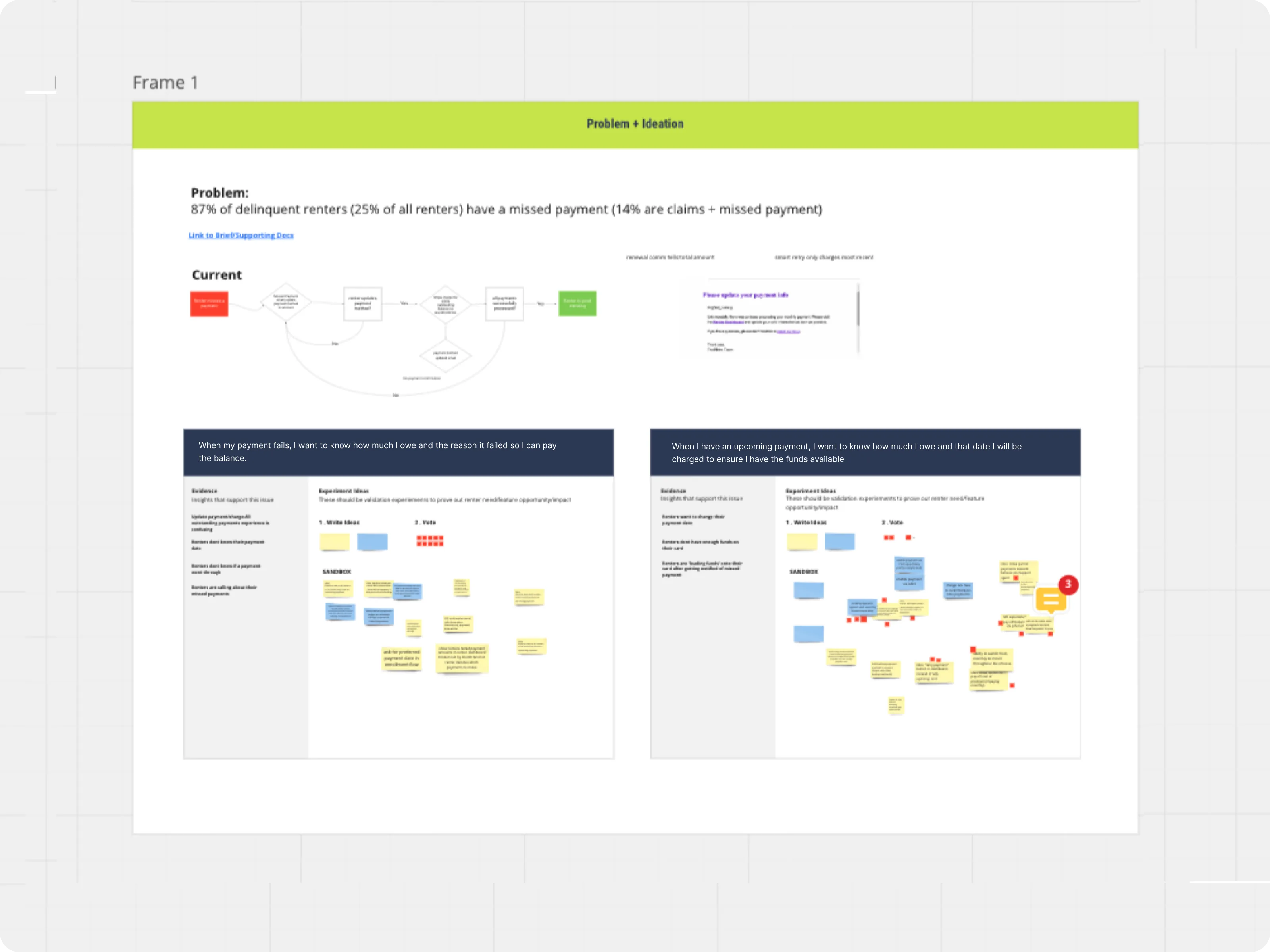
Our research led us to define two primary Jobs to Be Done contributing to uncollected failed payments:
- When my payment fails, I want to know how much I owe and the reason it failed so I can pay the balance.
- When I have an upcoming payment, I want to know how much I owe and the date I will be charged to ensure I have the funds available.
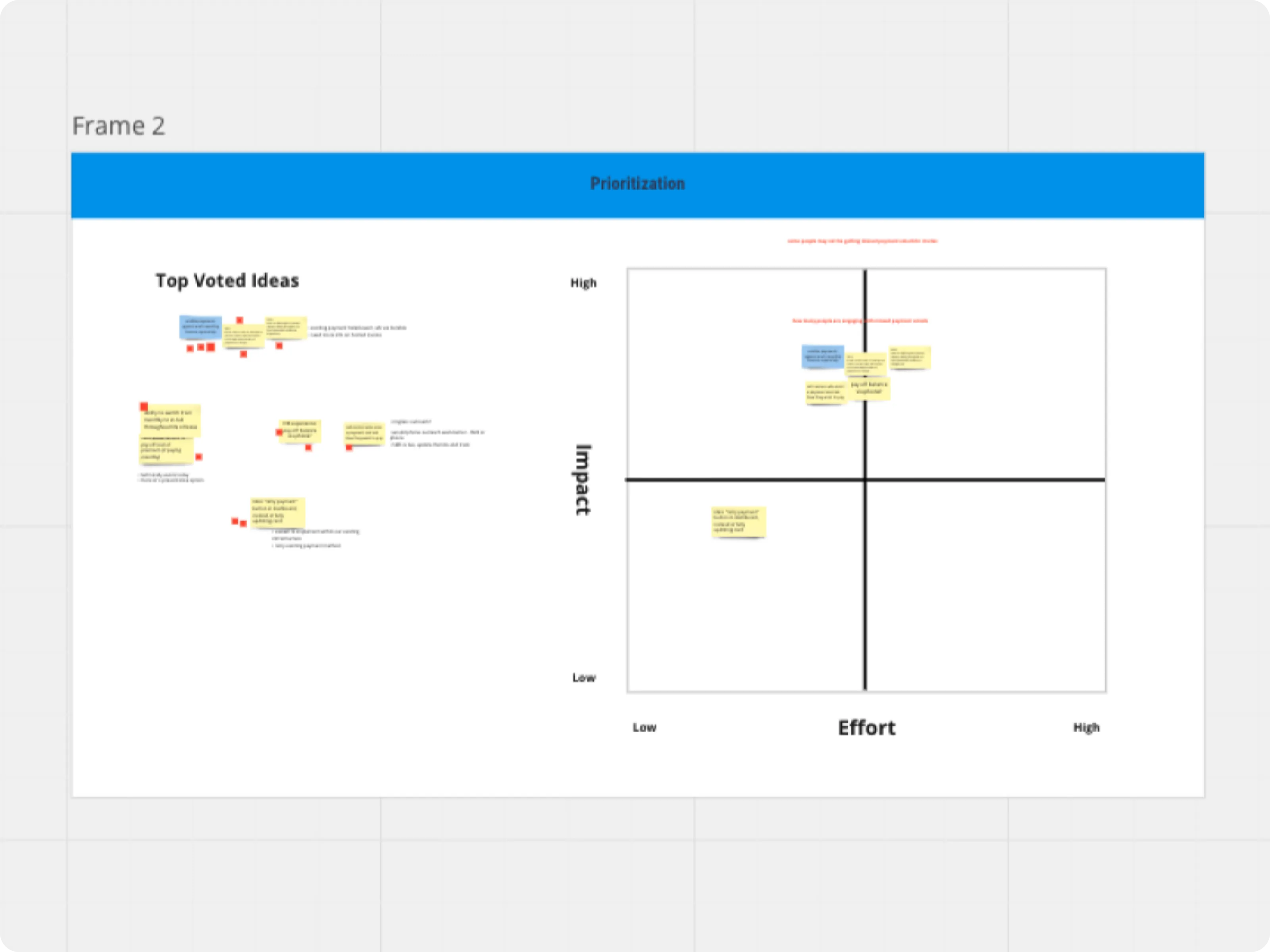
I led a cross-functional brainstorm centered around our insights and defined jobs.
The design approach
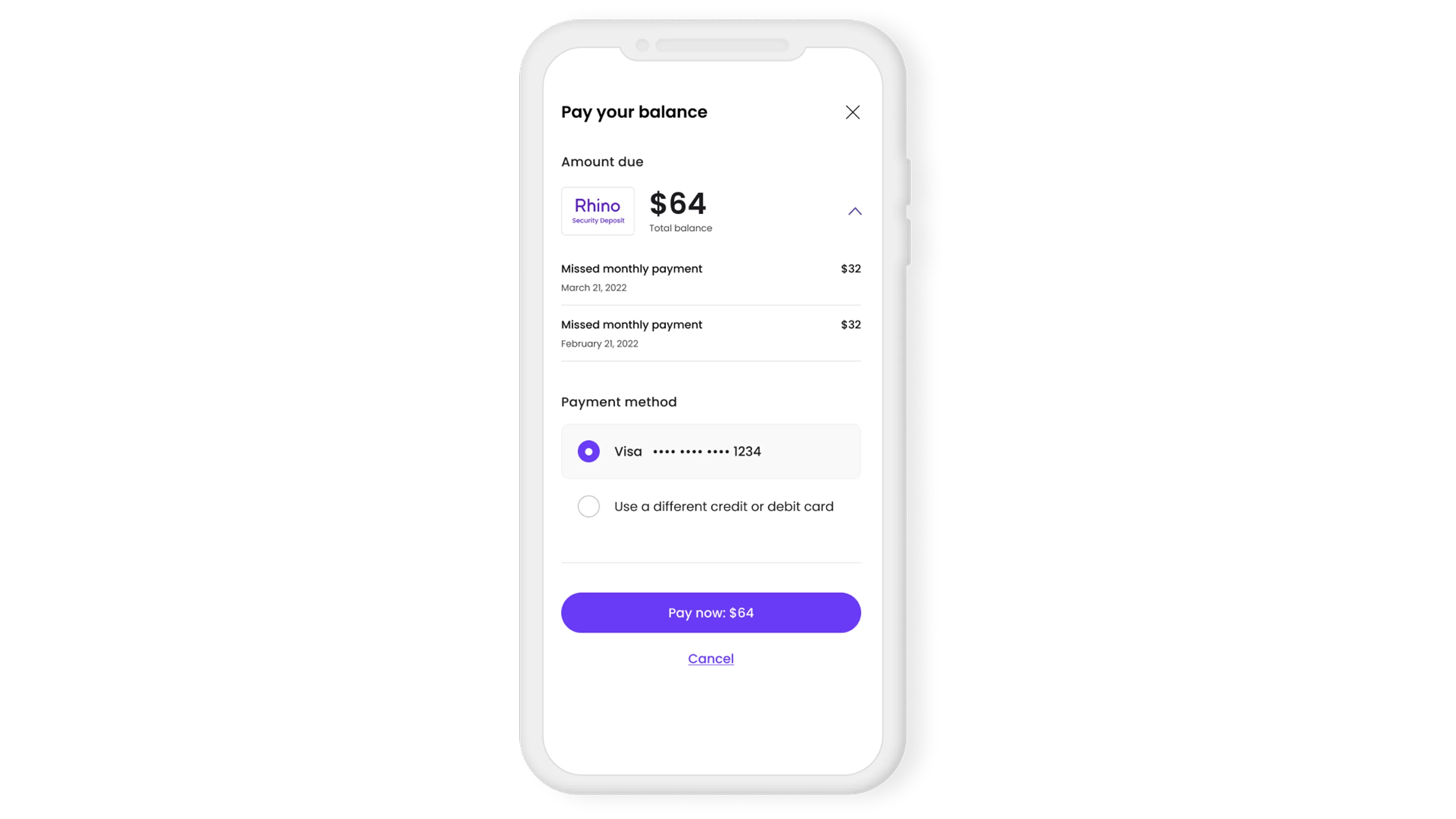
Build a pay-balance workflow accessible from the account, with updated communications directing renters how to pay. We defined design criteria that ensured the experience accurately represented backend payment states while minimizing resolution friction:
- Surface actionable feedback by exposing payment failure reasons using error data.
- Accurately reflect balance through a total balance view with optional line-item detail.
- Enable resolution by allowing balances to be paid directly.
- Minimize recovery friction by supporting use of an existing card on file.
- Preserve backend charge logic by reflecting partial payments and enabling incremental resolution.
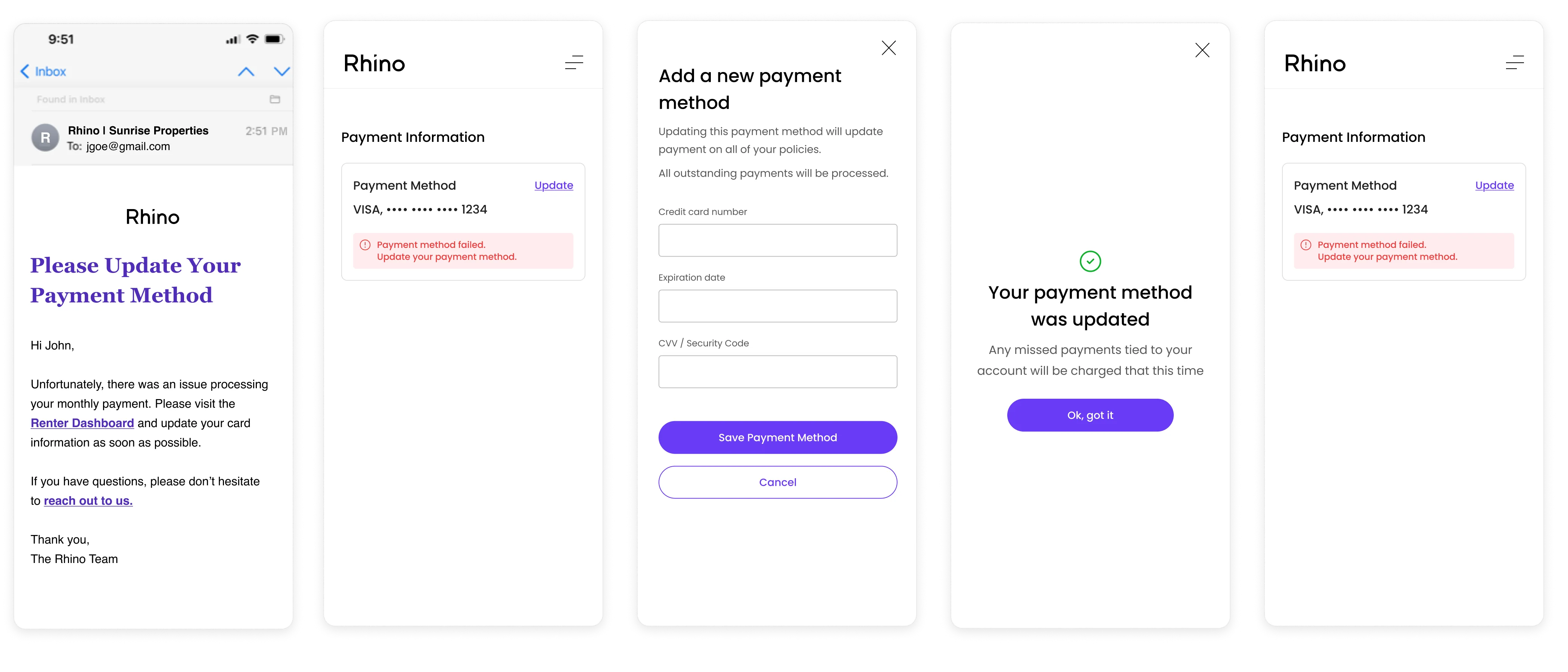
Failed payment email & pay-balance flow
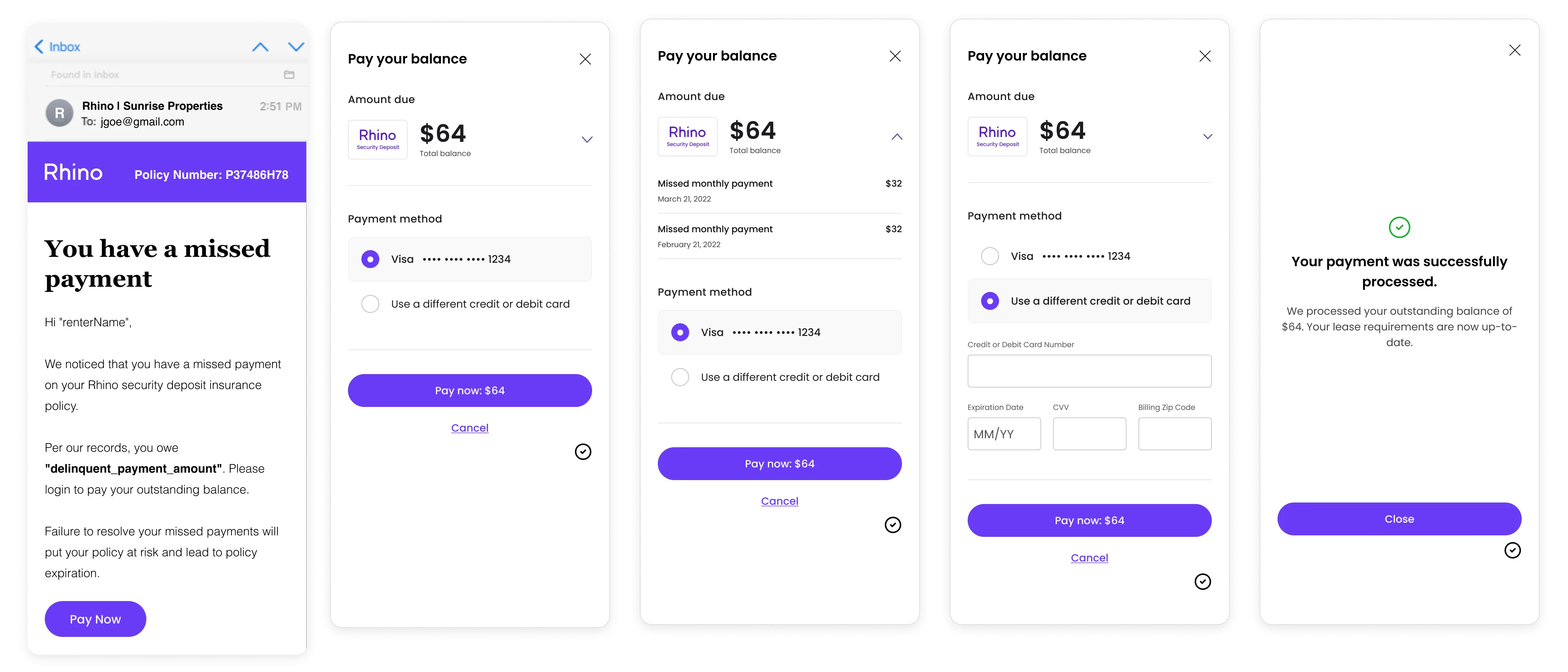
Renters received a failed-payment email lacking clear next steps; the link sent them to an “update payment method” flow that didn’t match how they expected to pay, and they couldn’t tell how much they’d be charged. I redesigned the email and flow with task-focused language, full visibility of itemized charges, and a default card option.
Account & confirmation screens
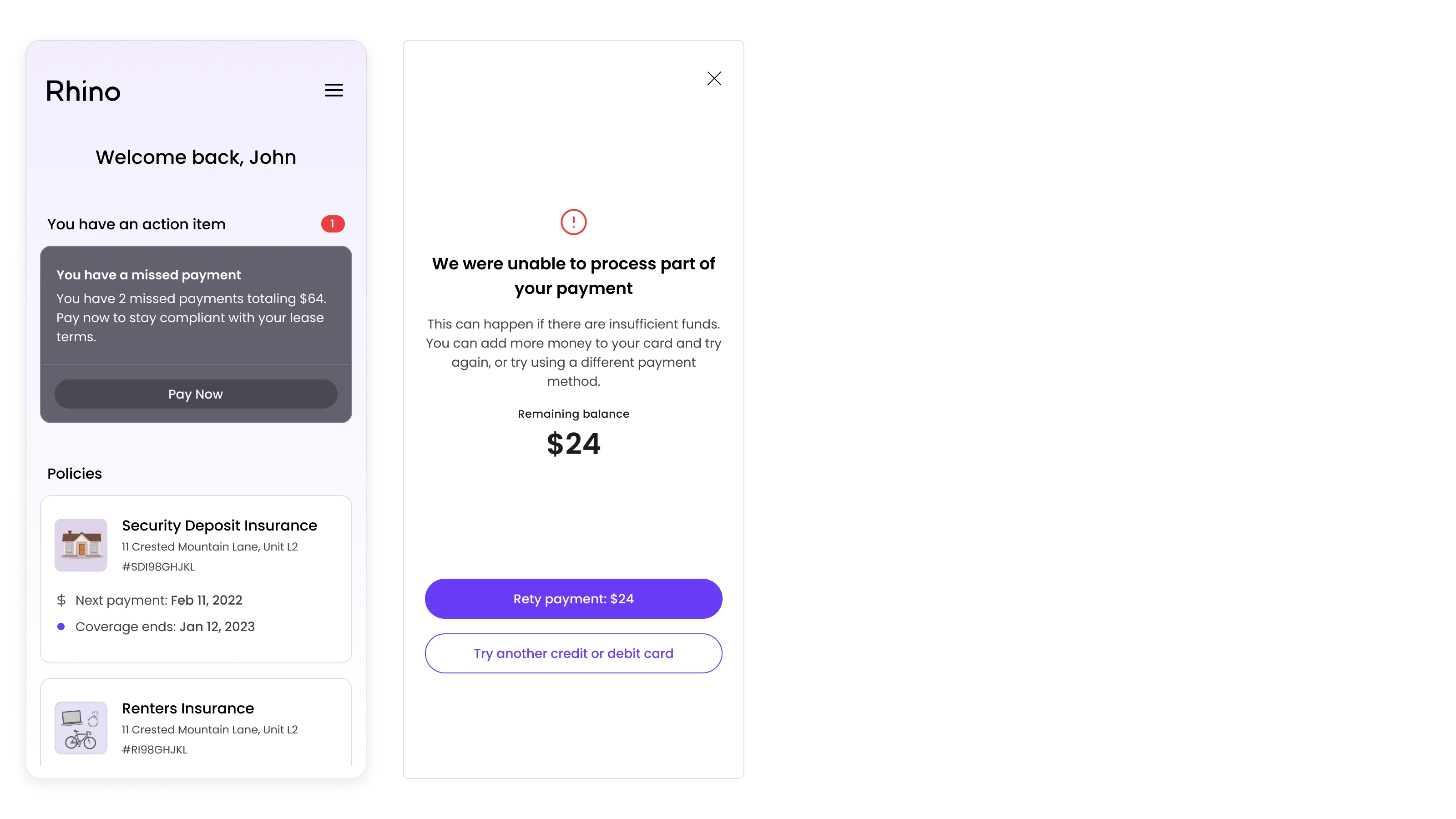
We added a dedicated “action required” section in-account (previously nonexistent), plus a partial-charge confirmation screen alerting renters when a balance remained after Stripe’s retry logic left a partial payment.
The results
Shifting from recovery to prevention
Research showed most renters intended to pay but often didn’t have enough notice to prepare for upcoming charges. We introduced proactive communications before payments were due, shifting the experience from reacting to missed payments to preventing them altogether.