Self service refill management tools
Craft a self-service medication refill management experience that would allow patients to fill prescriptions immediately, or reschedule future deliveries, aiming to reduce unsustainable inbound refill-related calls and messages for Nurx, an online telehealth platform.
Key metric
Reduce inbound refill-related messages by 10% within 1 month of launch
The team
• Senior product manager
• Engineering manager
• Clinical lead
• CX lead
Understanding the systems
Medication refills spanned multiple platforms and databases including consumer, CX, and clinical tools, so integrating any self service changes had to be handled accurately and safely.
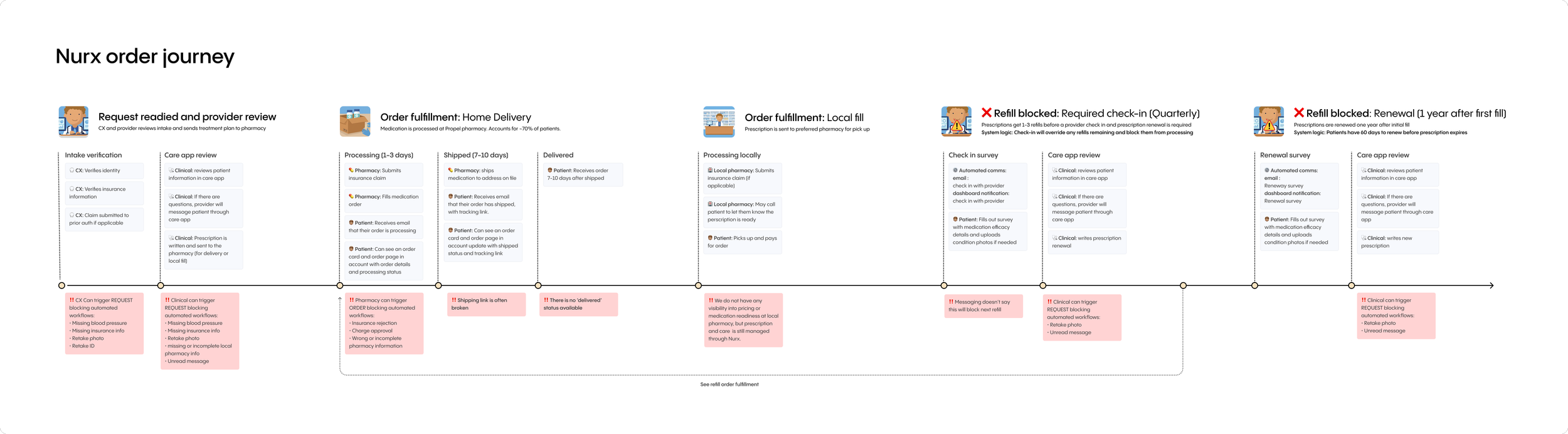
We started by mapping the existing refills journey self service would hook into, adding pain points identified from CX inbound analysis
Stakeholder interviews and process audit
Clinical team
Medication fill thresholds, prescription constraints, and safety requirements.
Pharmacy/Fulfillment team
Fill process, blockers and limitations.
Customer Support Team
Interviews and inbound analysis to uncover customer pain points in refill inquiries and messaging patterns.
Use Cases

I have too much medication and want to delay my refill

I am not on autorefill and need to order medication now

I don’t know where my order is*
*Timing aligned with orders being blocked/no more refills
Feature prioritization
Phase 1: Subscription visibility
Show patients the subscription information they need to make an informed decision, including order blocking actions.
Phase 2: Order now
Allow patients to order medication when they have refills remaining.
Phase 3: Change/delay delivery date
Give patients the option to change their delivery date when they have refills remaining
Phase 1: Subscription visibility
Show patients the subscription information they need to make an informed decision, including order blocking actions.
Phase 2: Order now
Allow patients to order medication when they have refills remaining.
Phase 3: Change/delay delivery date
Give patients the option to change their delivery date when they have refills remaining
Medication name
Medication
Technical Pivot
By using an existing calendar component, we can combine scheduling features (order now and delay fill) reducing build time by 1 month
Because of the complexity of the systems, engineering had taken longer than expected to build subscription visibility. Facing pressure from the business, we brainstormed ways to launch management features on time without compromising the experience
Impact
67%
Email click-thru (compared to 27%)
32%
Drop in delinquent renters
~70%
Drop in payment support tickets MoM
$405,763
Collected in 1 month post launch
What’s Next?
During discovery, we found that renters weren’t acting maliciously—they intended to pay but often lacked sufficient notice to prepare for charges. To address this, we implemented proactive communications sent before a payment failure, alerting renters to upcoming charges and shifting from reactive collections to a more preventive approach.